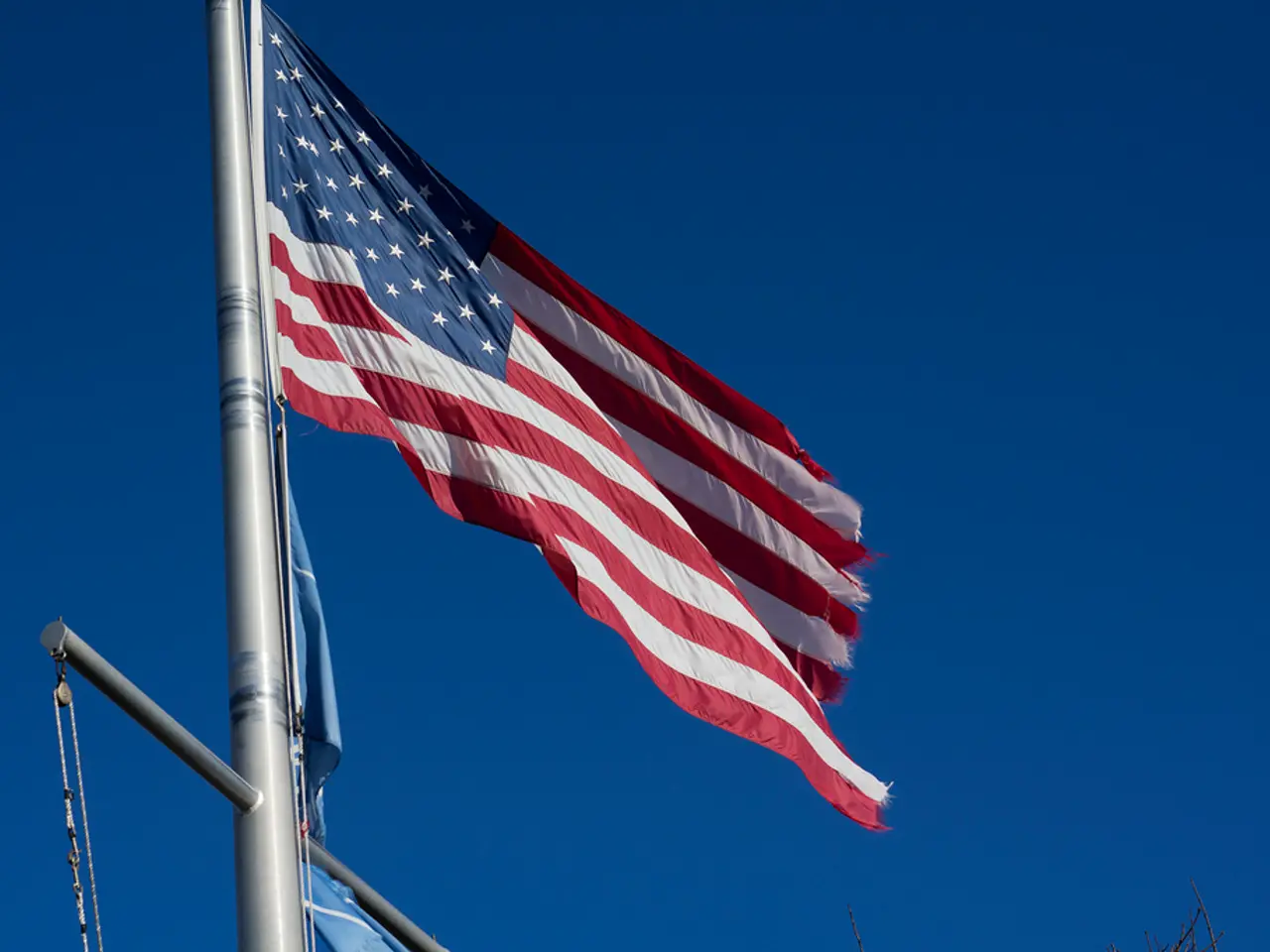
"Proponi un emendamento per il 250° anniversario dell'America che legalizzi l'incendio della bandiera"
Negli Stati Uniti, l'atto di bruciare la bandiera ha a lungo rappresentato un problema controverso, scatenando dibattiti sulla libertà di parola, sul patriottismo e sul ruolo del governo.
Nel 1989, Gregory Lee Johnson, membro del Partito Comunista Rivoluzionario, fu arrestato per aver bruciato una bandiera in segno di protesta, portando a un caso di riferimento, Texas contro Johnson. La Corte Suprema, con un margine di 5-4, ha stabilito che la bruciatura della bandiera è protetta dal Primo Emendamento. Tuttavia, questa decisione non ha posto fine alla controversia.
Il Chief Justice William Rehnquist, nel suo dissenso in Johnson, ha argomentato che la bruciatura della bandiera è "discorso a basso valore" non degno di tutela costituzionale, specialmente quando minaccia l'ordine pubblico o la decenza. Ha affermato che uno dei più alti scopi di una società democratica è quello di legiferare contro il comportamento considerato malvagio e profondamente offensivo per la maggioranza delle persone, come la bruciatura della bandiera.
Despite the Supreme Court's ruling, an amendment giving Congress the power to prohibit the physical desecration of the flag has passed the House but not the Senate. Republicans, who do not have the requisite two-thirds majority to pass an amendment unilaterally, are attempting to scare up sufficient votes from more patriotic Democrats to advance the measure to the states.
Interestingly, patriotism seems to be at historic lows, with a Pew report from 2006 indicating that nearly three-quarters of Americans believe flag burning should be illegal, and roughly half believe it should be unconstitutional. A June 2020 poll also showed a plurality of Americans still favouring the illegality of flag burning.
Flag burning was a popular mode of protest during the Vietnam War. Today, it is trivial to find footage of flag desecration online. The act has remained a symbolic form of dissent, often used to express strong political opinions.
In a twist, President Donald Trump unveiled an executive order requiring the attorney general to prioritise the prosecution of those who burn the American flag. The order is framed to permit prosecution only when a flag is burned in a way that is not protected speech. However, it is questionable whether this order complies with the 1989 Supreme Court decision in Texas v. Johnson, as it is functionally toothless.
Chad Flanders, a professor of law at St. Louis University, has argued that an originalist Court might have ruled differently in the case of Texas v. Johnson. Charles Fain Lehman, a fellow at the Manhattan Institute and senior editor of City Journal, has also weighed in on the debate, discussing the implications of the executive order and the ongoing debate surrounding flag burning.
Despite the ongoing debate, it's hard to agree with the Court's assertion in Texas v. Johnson that the flag's cherished place in the community would be strengthened by the act of flag burning. The issue continues to divide Americans, reflecting the complexities of free speech and the deep-seated emotions that patriotism can evoke.
Leggi anche:
- Strategie per la pubblicità politica mirata
- Riduzione della partecipazione elettorale alle elezioni del 2024 a Los Angeles rispetto al 2020 - Daily News (riformulato)
- Il leader giapponese si dimette prima del raduno del partito per decidere il suo destino
- La competizione si intensifica per la scarsa posizione libera del Senato nel Minnesota, superando il calendario delle elezioni primarie