
Le strategie di irrigazione migliorate ampliano la produzione agricola biologica
In pursuit of a greener and more sustainable future, organic farming is adopting innovative irrigation methods that not only conserve water but also protect the environment. Let's take a look at some of the key sustainable irrigation techniques that are revolutionising organic farming.
Sustainable irrigation techniques refer to methods for watering crops in a way that conserves water and safeguards the environment. These methods include drip irrigation, soil moisture management, and rainwater harvesting, but there are several additional techniques suitable for organic farming.
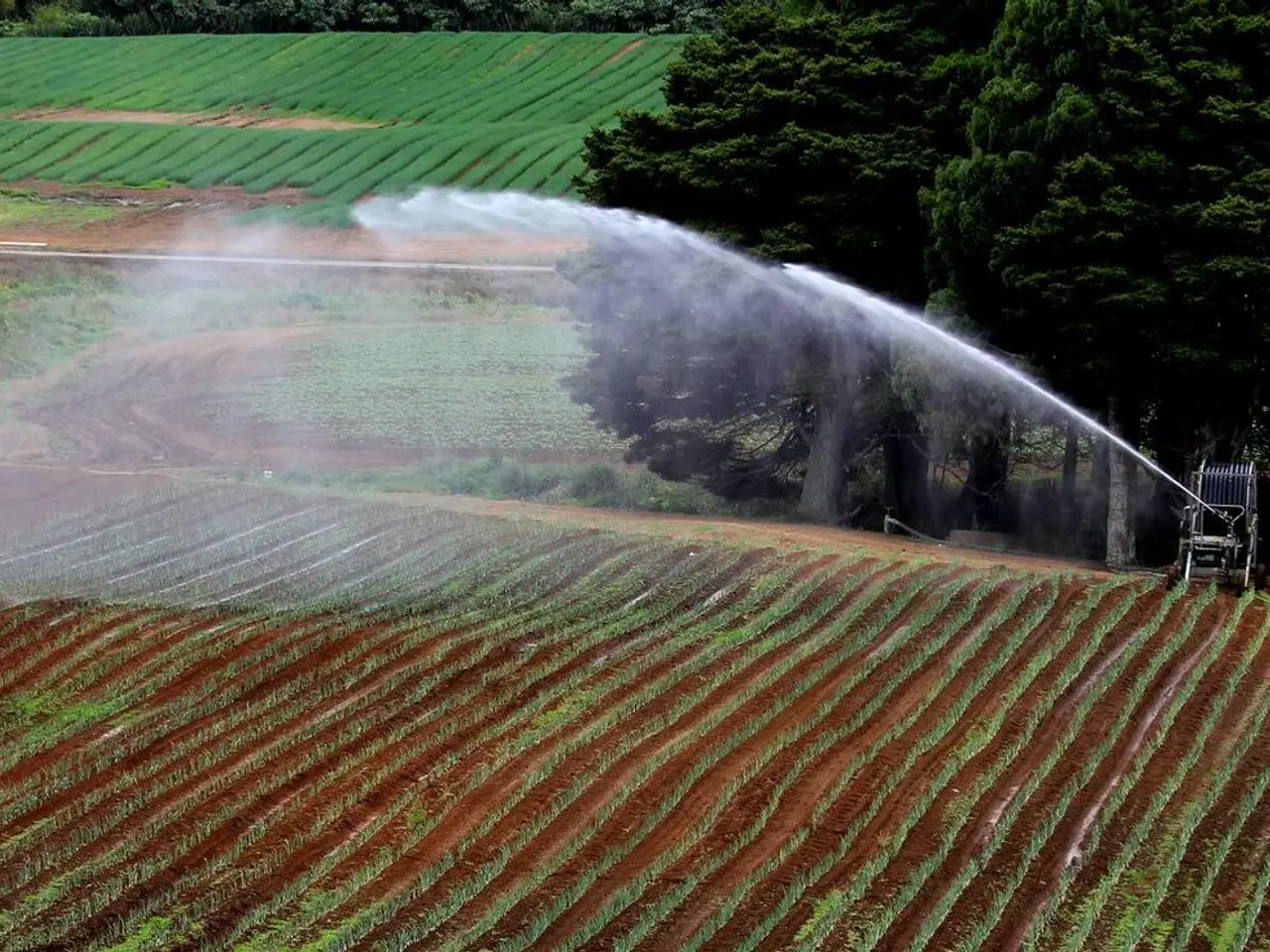
One such technique is sprinkler irrigation systems, which distribute water evenly across fields, simulating natural rainfall. Although they may be less efficient in windy or arid conditions, they can still be a valuable method depending on farm topography and climate.
Mulching, another sustainable technique, involves applying organic mulch around plants. This reduces evaporation from soil surfaces, thus conserving moisture and reducing irrigation needs.
Smart irrigation scheduling, utilising soil moisture sensors, weather data, and AI-driven models, helps determine the optimal timing and amount of water to apply. This ensures plants receive exactly what they need and minimises waste.
Surface irrigation with improved practices, such as minimising runoff and erosion, can be adapted sustainably. Traditional furrow or flood methods are usually inefficient, but optimised surface irrigation techniques can be a viable option.
Conservation agriculture, with practices like minimal soil disturbance, cover cropping, and crop rotation, improves soil structure and moisture retention, reducing irrigation requirements. Integrating renewable energy systems, like solar or wind power, for irrigation pumps also reduces the carbon footprint associated with irrigation.
Beneficial plant-microbe interactions can improve plant water uptake efficiency, potentially reducing irrigation needs. Encouraging symbiotic relationships with microbes is a promising area of research.
In the future, sustainable irrigation techniques for organic farming practices are likely to involve more drones, AI technology, and smart decisions about irrigation to take care of water resources and promote sustainability and efficiency.
Beyond irrigation, other eco-friendly farming practices include cover cropping, which protects the soil during the off-season and adds nutrients to the soil. Composting, another eco-friendly practice, adds nutrients back into the soil. Biodiversity in eco-friendly farming leads to healthier ecosystems, resulting in fewer pests and diseases.
Crop rotation is an eco-friendly technique that keeps the soil healthy and reduces pests. Natural pest control methods, such as using ladybugs, are preferred over harmful chemicals in eco-friendly agriculture.
Healthy soil is the backbone of organic farming, as it can hold moisture better, support plants, and help them resist pests and diseases. Soil moisture management is crucial for plant health, and can be monitored using methods like moisture meters and the finger test.
Water conservation is essential in eco-friendly agriculture, and can be achieved through methods like rainwater harvesting and drip irrigation. Using renewable water for irrigation can lead to cost savings, environmental friendliness, sustainability, healthy crops, and better yields.
By implementing a combination of these methods tailored to specific crop types, soils, and climates, organic farmers can enhance water use efficiency while supporting organic farming principles and environmental sustainability.
- Organic farming is embracing science and environmental-science to introduce innovative irrigation methods, promoting sustainability and combating climate-change.
- Drip irrigation is one of the sustainable techniques used in organic farming, conserving water and safeguarding the environment.
- Soil moisture management, rainwater harvesting, and sprinkler irrigation systems are among the techniques suitable for organic farming that contribute to sustainability and health-and-wellness.
- Even in windy or arid conditions, sprinkler irrigation can still be valuable for farms, though its efficiency may vary.
- Mulching, an eco-friendly practice, helps conserve soil moisture and reduces irrigation needs for sustainability and fitness-and-exercise.
- Smart irrigation scheduling, incorporating AI and weather data, ensures optimal water usage, minimizing waste and promoting eco-friendly lifestyle.
- Improved surface irrigation techniques, such as minimising runoff and erosion, can be sustainably adapted, making them a viable option for various climates and weather conditions.
- Conservation agriculture, with minimal soil disturbance, cover cropping, and crop rotation, promotes a healthier environment, reducing irrigation requirements and fostering workplace-wellness.
- Renewable energy systems (solar or wind power) for irrigation pumps help reduce the carbon footprint associated with irrigation, benefiting personal-finance, environmental-science, and the future of the industry.
- Beneficial plant-microbe interactions can potentially reduce irrigation needs and are an area of research for medical and health-and-wellness improvements.
- Investing in technologies like drones, AI, and smart irrigation decisions will help organic farming take better care of water resources, promoting sustainability and innovation in the tech industry.
- Cover cropping protects the soil during the off-season, adding nutrients and supporting eco-friendly practices in farming, home-and-garden, and business sectors.
- Composting is an essential eco-friendly practice that adds nutrients back into the soil and supports sustainable living and wealth-management.
- Biodiversity in organic farming results in healthier ecosystems, reducing pests and diseases and fostering a more harmful-free lifestyle.
- Crop rotation keeps the soil healthy, reduces pests, and promotes the utilisation of natural pest control methods (like using ladybugs) in eco-friendly agriculture, fashion-and-beauty, and food-and-drink industries.