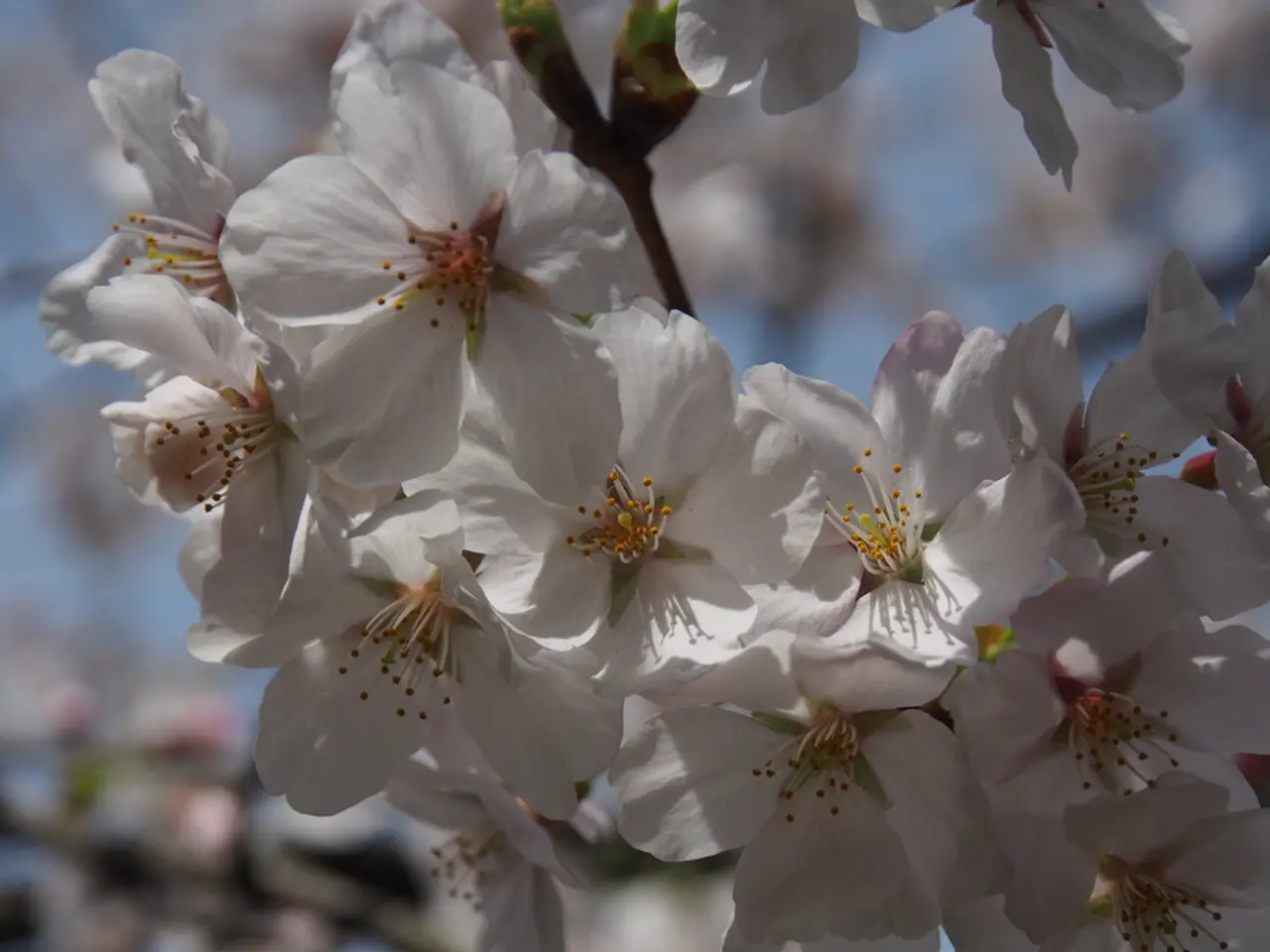
La breve esistenza simbolica del ciliegio
In the heart of spring, from March to May, weather websites in Japan closely monitor the cherry blossom "front" as warm weather suitable for blooming gradually moves from south to north in Japan. This annual spectacle has been a cherished tradition in Japan for over 1,200 years, with cherry blossom trees, known as sakura, being celebrated since at least the 8th century C.E.
The arrival of spring is marked by hanami, or "flower viewing," a family tradition that sees people gathering under the blooming cherry blossom trees to enjoy the fleeting beauty of the blossoms. The Japanese word natsukashi describes a nostalgic feeling of happiness tinged with sadness, and it is closely associated with the cherry blossom season.
Across the Pacific Ocean, the cherry blossom tree has found a second home in Washington, D.C., where more than 3,700 cherry blossom trees bloom around the Tidal Basin each spring, attracting over 1.5 million visitors. The National Cherry Blossom Festival in the U.S. capital city is a much-anticipated event, scheduled for March 20 - April 13, 2025, with the peak bloom forecast for March 28 - 31, 2025.
The story of how and why these cherry blossom trees were gifted from Japan more than 100 years ago and planted in America's capital city is fascinating. It all began with Eliza Ruhamah Scidmore, a photographer and writer, who campaigned for over 25 years to have cherry blossom trees planted in Potomac Park in Washington, D.C. The person who initiated the idea was Scidmore herself, and her persistence eventually led to the first group of 3,020 healthy cherry blossom trees being sent to Washington, D.C.
However, the initial shipment of trees was destroyed due to insects and disease. A wealthy Japanese chemist, Dr. Jokichi Takamine, played a role in making the cherry trees a gift from Japan to D.C. after the initial shipment was lost. A second shipment of 3,020 healthy cherry blossom trees arrived in Washington, D.C. on March 26, 1912, and were planted by First Lady Nellie Taft the next day.
Cherry blossom festivals are not exclusive to Japan and Washington, D.C. These celebrations of spring can be found around the world, from Macon, Georgia, where the International Cherry Blossom Festival features 350,000 cherry blossom trees and an annual Wiener Dog Race, to Curitiba, Brazil, where the cherry blossom trees bloom in July, which is winter in the Southern Hemisphere.
The cherry blossom tree does not produce edible cherries, but it does produce a tiny dark fruit that birds and animals eat. Cherry blossom trees grow all over the world in temperate climates and bloom for about two weeks. Despite their short blooming period, the cherry blossoms continue to captivate people with their fleeting beauty and the traditions they represent.
One such tradition is the Sakura Matsuri Japanese Street Festival, organized every April by John Malott, a former president of the Japan-America Society of Washington, D.C., to coincide with the Cherry Blossom Festival. This vibrant event showcases Japanese culture, music, and food, offering visitors a taste of Japan right in the heart of Washington, D.C.
As the cherry blossom season approaches, let us take a moment to appreciate the beauty of these delicate flowers and the rich history they represent. Whether you find yourself under the blooming cherry blossom trees in Japan, Washington, D.C., or anywhere else in the world, remember to cherish the fleeting moments of spring and the traditions they inspire.
Leggi anche:
- Tre donne anziane, affezionatamente chiamate nonne di Kaha Aden, costituiscono una parte significativa della comunità.
- La storia si svolge attraverso la porta
- Licenze di scommesse sportive per dispositivi mobili concesse a DraftKings e Circa per il lancio a dicembre nel Missouri
- Informazioni sui programmi di Medicare e di trattamento con oppiacei (OTP)