
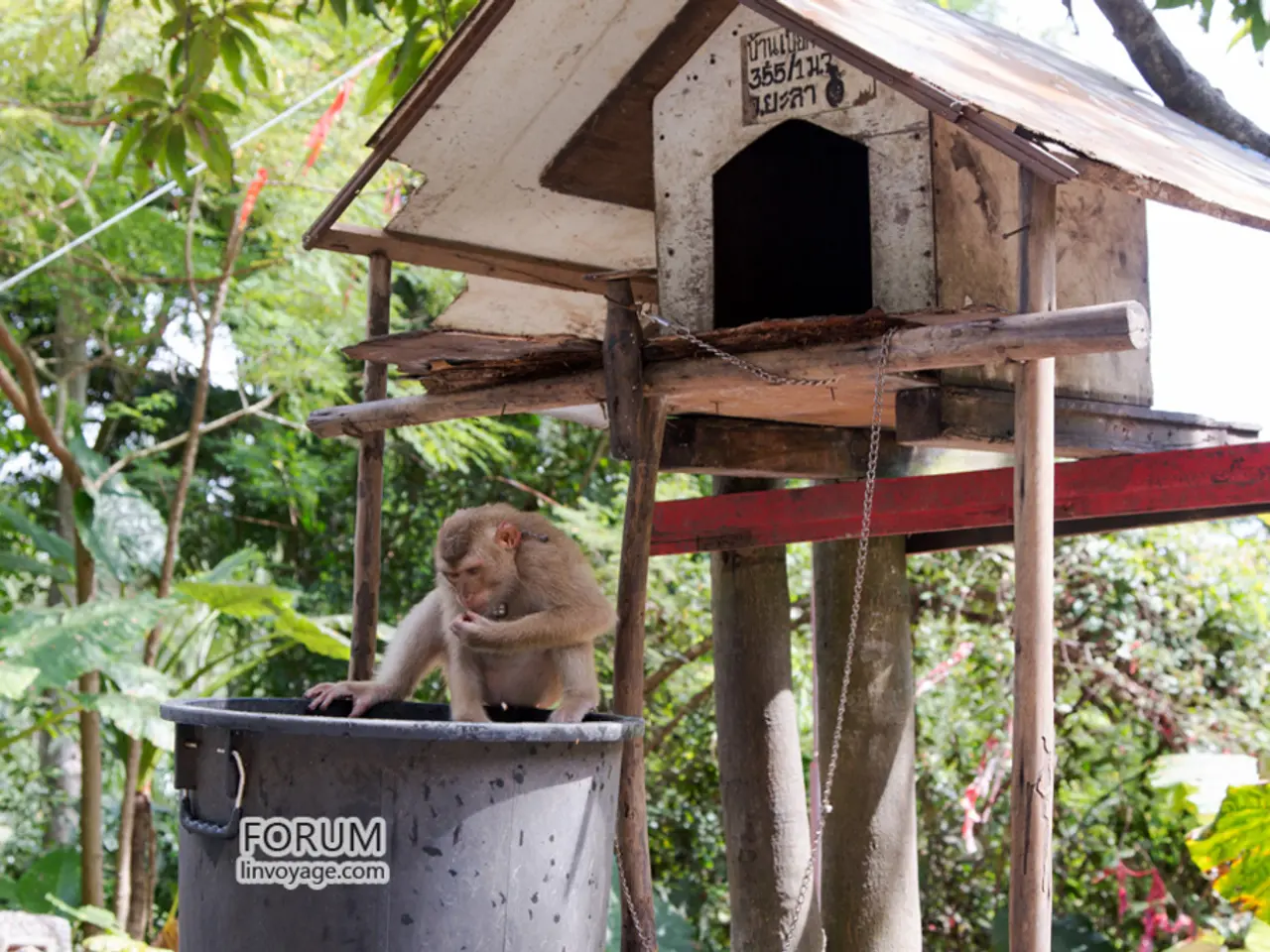
Investigazione della relazione simbiotica tra i bonobo e il loro ambiente forestale
Al centro della Basin del Congo, una specie unica di primate, il bonobo, gioca un ruolo vitale nel mantenere l'equilibrio delicato dell'ecosistema. Questi gentili creature, note scientificamente come Pan paniscus, sono trovate solo a sud del fiume Congo e a nord del fiume Kasai nella Repubblica Democratica del Congo.
I bonobo sono fruttivori onnivori, trascorrendo gran parte della loro giornata mangiando frutti e foglie nella chioma. Con una figura snella, hanno un lungo torso sottile, spalle strette, un collo sottile, una piccola testa e lunghe gambe. Vanno da 70 a 83 cm di lunghezza totale. La massa corporea media dei maschi adulti di bonobo è di 45 kg, mentre le femmine adulte pesano 33 kg.
Questi primati non solo contribuiscono alla catena alimentare, ma svolgono anche un ruolo ecologico significativo. Consumando frutti e altro materiale vegetale, i bonobo aiutano nella dispersione dei semi. Molte piante, come il Dialium, dipendono dall'agenzia di dispersione dei bonobo. I semi che passano attraverso il loro sistema digerente possono germogliare, aiutando a diffondere e far crescere la popolazione delle piante.
Despite their importance, bonobos have faced numerous threats. Wars and continued conflict have led to hunting for meat due to food scarcity and inaccessibility to markets. However, the indigenous people of the Congo Basin hold a deep respect for bonobos, viewing them as relatives from a distant past. Many legends passed down through generations perpetuate taboos against hunting bonobos due to the belief that helping them will result in help in return.
Efforts to protect bonobos and their habitat are ongoing. Jane Goodall, renowned for her work with chimpanzees, established the Bonobo Peace Forest, a conservation initiative supported by the Global Conservation Fund and local partners. The Bonobo Peace Forest, along with the Sally Cox Bonobo Conservation Initiative, are crucial in preserving the Congo Rainforest and the bonobos that call it home.
The Democratic Republic of Congo, one of the "Seventeen Megadiverse States of the World", is home to 70% of the planet's terrestrial biodiversity. The country's rich wildlife, including bonobos, is a testament to its unique ecosystems. A story from Fire of Elia transcribed by Takayoshi Kano explores the cultural significance of bonobos in the Congo Basin.
Bonobos communicate through vocal means, facial expressions, and hand gestures. They are known for their skills in taking eggs from nests and honey from bee hives. These intelligent primates have adapted to their environment, making them an integral part of the Congo Basin's ecosystem.
As part of the "Species of the Week" series, we highlight the unique biogeographic regions of Earth. This week, we focus on the bonobos of the Congo Basin, guardians of the rainforest, who continue to face challenges but remain a beacon of hope for conservation efforts.