
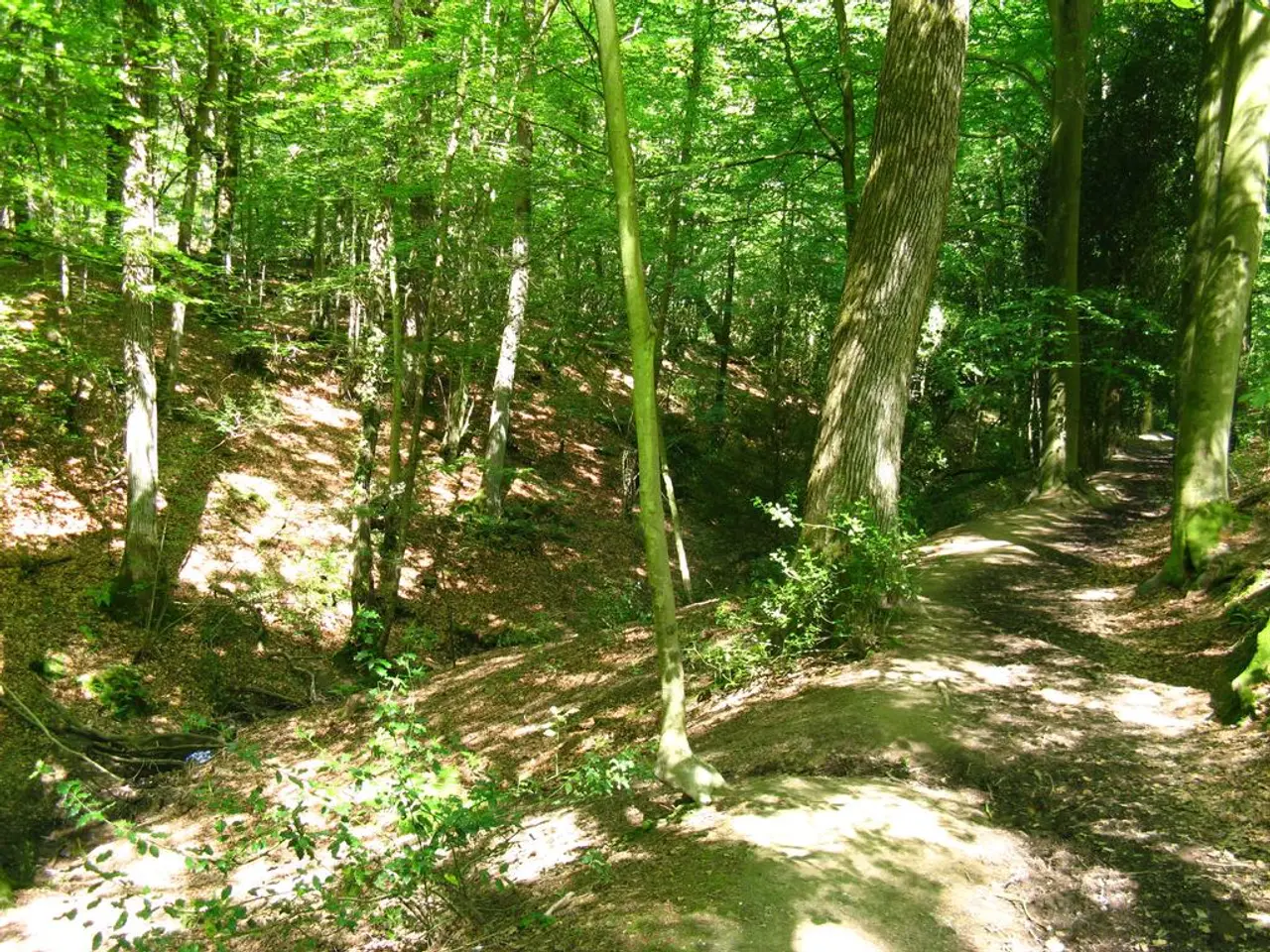
Durante l'amministrazione di Milei, il governo afferma di aver ampliato le terre boschive, mentre il settore privato esprime preoccupazioni per gli investimenti insufficienti.
In Sud America, l'industria forestale argentina si trova in un momento critico di incertezza e mancanza di investimenti. La legge 25.080, pilastro dell'attività forestale, è stata priva di fondi e non vengono più pagati i sussidi.
Questa carenza di finanziamenti ha portato a un peggioramento dei prezzi di pino e eucalipto, come previsto gli investimenti attesi non si sono materializzati con l'entrata in vigore della legge 25.080. La legge, prorogata fino al 2029, non riceve i fondi necessari per sostenere le nuove piantagioni, lasciando l'industria in una situazione precaria.
Despite some reforestation and conservation efforts over recent years, Argentina's overall forest area trends have been mixed. The country's forest area increased by 48,759 hectares during the Milei era, but it's unclear if this marks a significant trend. The growth in the forest area is not more than 5%.
The forest industry, considered one of the sectors with great potential to drive growth, industrialization, and generate foreign currency for the country, is now in a critical state. The Secretariat of Agriculture, under the Ministry of Economy, reports that the area of forest plantations in Argentina reached 1,326,478 hectares as of May 2025.
The aspiration to reach 2,000,000 hectares of planted forests by 2030 is far away. Without promotion, only large industries are continuing to plant, but not smaller ones. In fact, Rafael Scherer, head of Pindó, a main sawmill in Misiones, stated that small producers are not planting more pine.
The currency lag, the strong decline in construction activity, and the slowdown in consumption are putting many small and medium-sized enterprises and even large ones in the forest industry at risk. The possible entry of imported forest producers, especially from Brazil, is a concern in the forest industry.
The main forest provinces in Argentina are Corrientes, Misiones, Entre Ríos, and Buenos Aires, which account for 85.2% of the planted area. Neuquén, Chubut, Córdoba, and Río Negro are the most significant provinces in the group that accounts for the remaining planted area.
FAIMA, which brings together 28 chambers of the forest industry, has set up a "Crisis Committee" to help avoid the closure of companies, especially sawmills. The industry is considered one of the sectors with great potential to receive new projects and drive growth, but without investments, this potential remains untapped.
Argentina has potential for 3 or 4 mega-plants of cellulose paste, similar to the ex-Botnia, which generated a controversial conflict with Uruguay at the beginning of the last decade. The forest industry, despite its challenges, continues to hold promise for the Argentine economy. However, addressing the current funding shortages and promoting investment in the sector will be crucial for its future growth and sustainability.
- Le notizie dello stato critico dell'industria forestale argentina sono emerse a causa di una carenza di finanziamenti e mancanza di investimenti, in particolare nel settore degli investimenti e del personal-finance.
- Il deterioramento dei prezzi di pino e eucalipto è una conseguenza diretta del fatto che gli investimenti attesi non si sono materializzati nel settore finanziario.
- Poiché la legge 25.080, pilastro dell'attività forestale argentina, non riceve i fondi necessari, la capacità della legge di sostenere le nuove piantagioni è compromessa, indicando una lotta nei settori degli affari e della tecnologia.
- Le opportunità di istruzione e di sviluppo personale nell'industria forestale potrebbero essere aumentate con nuovi investimenti, aprendo vie per la crescita e l'industrializzazione, come notato nelle notizie generali.
- L'ingresso di produttori forestali importati, soprattutto dal Brasile, è una preoccupazione nei