Decodifica della comunicazione non verbale: una guida per interpretare il linguaggio del corpo
In the intricate dance of human interaction, body language plays a crucial role that often goes unnoticed. From the subtlety of a raised eyebrow to the grandeur of a sweeping gesture, our bodies communicate a wealth of information without uttering a single word.
For those wanting to become students of human behaviour through body language, it's essential to study the unspoken rules of the subcultures and surroundings that we inhabit. This journey of understanding begins with an overview into the different types of nonverbal communication.
Researchers have recorded almost a million nonverbal cues and signals. These range from facial expressions, such as a smile or a frown, to hand gestures, posture, and eye contact. But it's not just about identifying these cues; it's about interpreting them correctly.
Crossing the arms and clearing the throat can both be self-soothing or pacifying behaviours and are not necessarily evidence of disinterest or deception. Similarly, viewing someone as unfriendly because they do not smile as much as socially expected can be misleading, as some people experience a flat affect.
Understanding body language requires patience, practice, curiosity, and a willingness to sometimes be wrong about human behaviour. Becoming a perceptive observer of nonverbal communication requires paying careful attention to subtle movements.
Technology can aid in this pursuit. Recording oneself communicating, as suggested by Blake Eastman, creator of The Nonverbal Group, can help grow body language awareness. Analyzing video allows for a closer study of nonverbal communication, providing valuable insights into our own and others' behaviours.
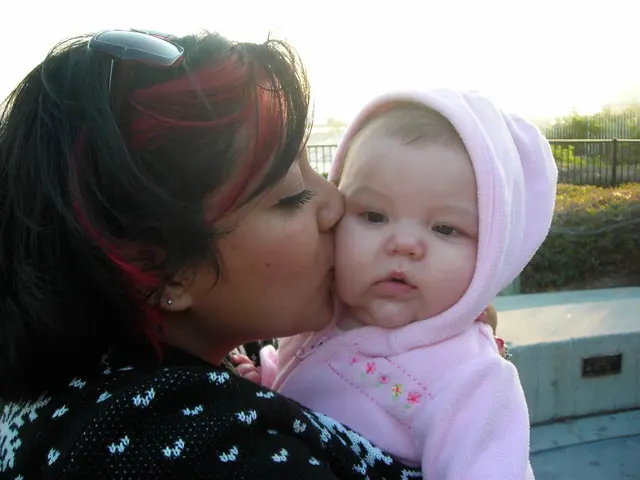
However, it's important to remember that nonverbal communication is interpreted differently across varying cultures and settings. For instance, a kiss on the cheek could be a romantic gesture in America but merely a platonic greeting in parts of Europe. Sustained eye contact could signal polite attention at work but could seem rude at a public park.
Reading and understanding body language takes time, but it's a skill worth mastering. It's essential in expressing intimacy, providing information, and exercising professionalism. It's a key to understanding what we say without words.
Barbara and Allan Pease, authors known for their research and publications on body language, combine insights from psychology, communication, and behavioural studies to explain nonverbal communication. They highlight the importance of understanding the forces that shape nonverbal communication, including personality, environment, biology, and culture.
Asking for gentle clarification can help match emotions with facial expressions. For example, if someone seems unhappy but denies it, asking, "Are you sure you're okay?" can provide a more accurate reading of their emotional state.
In conclusion, understanding body language is a journey of discovery, one that requires patience, practice, and an open mind. It's a tool that can help us navigate the complexities of human interaction, bridging gaps and fostering connections. So, the next time you find yourself in a conversation, take a moment to observe the nonverbal cues around you. You might just uncover a hidden message.
Leggi anche:
- Esplorare il nesso: Le infanzie traumatiche alimentano gli antagonisti cinematografici?
- Il Venezuela continua a promuovere le iniziative di energia solare in un'epoca di interruzioni di corrente
- Il capo pubblicitario si è dimesso dopo nove mesi di servizio .
- Guida per la realizzazione di una spirale di erbe per una permacoltura sostenibile