Concetti di giardinaggio facile da curare per un aspetto affascinante
In pursuit of a beautiful and eco-friendly garden, landscaping a hillside presents its own unique challenges. However, with the right approach, it can be transformed into a stunning and low-maintenance oasis.
Firstly, it's essential to consider the terrain. A hillside is difficult to plow, mow, and irrigate, making it ideal for native trees, shrubs, and ground covers that thrive in such conditions. Mixing several types of native trees and shrubs not only adds visual interest but also provides protection against erosion.
Native plants, such as wildflowers, stonecrop, and ornamental perennials like daylilies, creeping phlox, or lamb's ears, are effective in controlling soil erosion and require minimal maintenance. They create a tall, drought-tolerant ground cover that doesn't require mowing.
For low maintenance ground cover, consider native grasses and a mix of woody plants like creeping juniper, fragrant sumac, bearberry, and Russian arborvitae. These plants form dense mats and require little care.
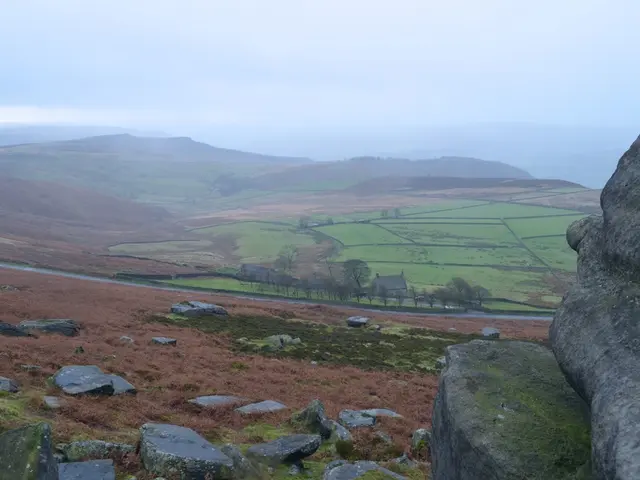
Mountains and hills offer breathtaking views and add interest to a landscape. To make the most of these vistas, consider using native plants that are drought-tolerant and require minimal watering.
When preparing the soil for planting, clearing debris and weeds is necessary. To further prevent erosion, natural jute ground fabric can be used. This fabric stabilises the soil, prevents erosion, and keeps down weeds. Metal staples or wooden stakes can be used to attach the fabric in place.
Planting takes place over the natural jute ground fabric or alternative materials like hay or straw. This provides an additional layer of protection against erosion.
It's important to avoid invasive plants like ivy for hillside landscaping, as they can escape cultivation areas and cause problems. Instead, opt for common and recommended non-native, low-maintenance ground covers such as evergreen Cotoneaster dammeri (Zwergmispel), creeping juniper Juniperus horizontalis ‘Wiltonii’, and carpet pine Pinus sylvestris ‘Watereri’. These plants are drought-tolerant and form dense mats, making them ideal for sun-exposed slopes.
In conclusion, low-maintenance hillside landscaping is possible for home gardeners. By choosing native and non-invasive plants, preparing the soil properly, and using measures like natural jute ground fabric, homeowners can create a beautiful, low-maintenance garden that not only adds to the aesthetic appeal of their property but also helps prevent erosion.
Leggi anche:
- Relazioni tra alcuni alimenti e funzioni cognitive migliorate
- Salute riproduttiva: Incidenza di infezioni da lieviti con l'uso di contraccettivi
- L'industria automobilistica cinese potrebbe emergere trionfante di fronte a piccole sfide
- Guida alimentare per la cura delle infezioni ricorrenti del tratto urinario: alimenti da consumare e da evitare